
The Stakes

Ask a modern spiritual seeker to identify a foundational Hermetic text, and they will almost certainly point to The Kybalion. Yet, if we are to take the word “Hermetic” seriously, we have to face an uncomfortable truth: The Kybalion is not a Hermetic text. It is a work of early 20th-century New Thought, dressed in the robes of ancient Egyptian mysticism.
The confusion is widespread. When I first read the book a decade ago, I misremembered its list of “Universal Laws” as twelve rather than seven. That error is telling. It highlights our tendency to treat this book as a flexible, self-help checklist—a modern menu for personal success—rather than a specific set of rigorous doctrines.
But the difference between a New Thought success manual and the authentic Hermetic path is not merely a matter of semantics; it is the fundamental difference between mastering the mind and surrendering the self. While The Kybalion operates as a conscious representation of powerful, intuitive truths, it remains a product of its era’s industrial optimism. It promises to teach you how to influence the world, whereas traditional Hermeticism demands the dissolution of the ego so that one might eventually transcend the world entirely.
To understand why this distinction matters, we must move beyond the “Universal Laws” and examine what The Kybalion actually is: a brilliant interface for the human mind, and why confusing that interface with the ancient goal of union with the Divine is a detour that keeps many seekers from ever truly beginning the journey.
We have spent the last century conflating two very different streams of thought. One is an ancient, rigorous path of theurgical transformation; the other is a turn-of-the-century manual for psychological success. It is time to draw the line between them.
The Great Divergence: Theurgy vs. Utility
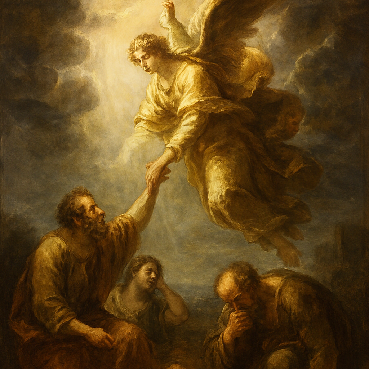
To understand the disconnect, we must look at the objective. The Hermeticism of the ancients—the path traced in the Corpus Hermeticum—has one goal, and only one: to unite the practitioner with God (or “The All”). It is a process of shedding the ego, purifying the soul, and achieving Gnosis. It is a vertical path, an ascent that demands the dissolution of the self.
The Kybalion, by contrast, functions under the guise of Hermeticism, but is concerned with the mechanics of the mind. It obsesses over vibration, polarity, and manifestation. It is essentially a treatise on the “Mind of Man”.
If true Hermeticism is about the surrender of the individual to the Divine, The Kybalion is about the expansion of the individual to influence the world. One is about becoming nothing so that God may be everything; the other is about mastering the “mental plane” so that you may have anything.
The Ghost in the Machine: William Walker Atkinson
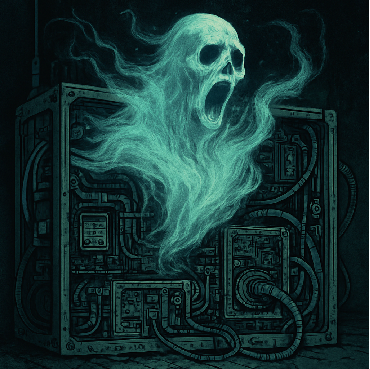
The mystery of the “Three Initiates” is the first clue that something is amiss. For decades, readers have puzzled over who these anonymous masters might be. The answer, widely accepted by scholars and researchers, is not an ancient Egyptian priesthood, but a man named William Walker Atkinson.
Atkinson was a titan of the New Thought movement—a prolific author, editor, and advocate of “mental science” in early 20th-century Chicago. When we view The Kybalion through the lens of its 1908 publication date, the “Ancient Hermetic” aesthetic starts to look like a brilliant, albeit heavy, marketing coat of paint.
The very name—”Three Initiates“—is a clever nod to the last line of the Emerald Tablet: “Therefore I am called Thrice Greatest Hermes, having all three parts of the wisdom of the whole universe.” By adopting this moniker, the author effectively colonised the brand of antiquity to grant modern, American-born psychological techniques an aura of ancient, mystical authority.
This isn’t to say Atkinson was a charlatan. He was an incredibly effective writer. But we must admit that The Kybalion is a product of its time—the industrial optimism of the early 1900s—not a survival from the mystic-heavy atmosphere of Alexandria.
The Mental Plane Trap
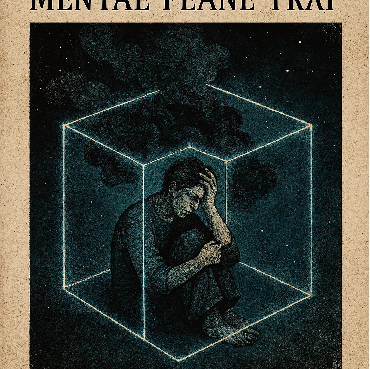
This is where the hierarchy of the planes becomes essential. In traditional esoteric and Kabbalistic thought, we navigate through four primary planes: the Physical, the Emotional (Astral), the Mental, and the Spiritual.
The Kybalion is an absolute masterpiece if you’re looking for an operating manual for the Mental Plane. It provides clear, actionable instructions on how to leverage the laws of vibration and mental polarity to alter your subjective experience. It is a tool for horizontal movement—mastery of one’s circumstances, influence over one’s reality, and the stabilisation of the ego.
However, the goal of Hermeticism is to traverse these planes, not to decorate the Mental one.
Most modern seekers mistake the map for the territory. They study the seven principles and believe they have touched the Divine. In reality, they have only learned to navigate the machinery of their own minds. The Kybalion suggests that by mastering the Mental plane, you become a “Master”, Traditional Hermeticism suggests that until you transcend the Mental plane, you remain a prisoner of it.
The Conscious Representation of Unconscious Truths

So, what is The Kybalion? It is not a Hermetic text, but it is not “useless.” It is, perhaps most accurately, the conscious representation of unconscious truths.
The Kybalion, often associated with Hermetic philosophy, diverges significantly in its principles and interpretations. While both share a common historical background, The Kybalion presents a distinct synthesis of metaphysical concepts that does not fully align with traditional Hermeticism. This text emphasises the importance of mentalism, vibration, and polarity, offering a unique framework for understanding reality that is not rooted in Hermetic teachings. Thus, it is essential to recognise The Kybalion as a separate entity that reinterprets, rather than reflects, the foundational tenets of Hermeticism.
We all feel, intuitively, that the rhythm of life—the ups and downs—is real. We sense that our mindset dictates our experience of reality. These are pre-existing, intuitive realisations that seekers have had for millennia. The Kybalion takes these vague, intuitive feelings and systematises them. It provides a vocabulary—Mentalism, Vibration, Polarity—to describe things we already sensed were true.
It acts as a brilliant User Interface for the human experience. But we must stop conflating a User Interface with the Operating System of the Cosmos.
Conclusion: Reclaiming the Path

If The Kybalion helps you navigate your daily life, it has succeeded as a book of practical psychology. But do not mistake the conscious representation of a truth for the truth itself.
By reclaiming the definition of Hermeticism, we stop looking for God in a self-help manual and start looking for the Divine in the tradition itself. The distinction is not just academic; it is vital. If you want to influence your bank account, your relationships, or your mood, The Kybalion is an excellent guide. But if you are seeking that beautiful and silent union with The One, put down the “mental laws” and turn back to the Corpus.
They are two entirely different roads. One teaches you how to walk; the other teaches you how to fly. It is time we stopped confusing the two.